

 The Build-Up to 1952: Rising Tensions
Early Protests (1948–1951)
March 1948: Students at the University of Dhaka protested Jinnah’s language policy. Leaders like Sheikh Mujibur Rahman (future founder of Bangladesh) were arrested.
1949: The Awami Muslim League (later Awami League) emerged as a political force advocating for Bengali rights.
1950: The Basic Principles Committee Report proposed Urdu as the sole state language, sparking nationwide outrage in East Pakistan.
Formation of the All-Party Central Language Action Committee
In 1952, political parties, student groups, and cultural organizations united under the All-Party Central Language Action Committee to coordinate protests. Key leaders included:
Abdul Matin (student activist)
Oli Ahad (politician)
Dhirendranath Datta (East Bengali legislator who first demanded Bengali’s recognition in 1948).
 The Climax: February 1952
Government Crackdown and Section 144
On February 20, 1952, the Pakistani government imposed Section 144 in Dhaka, banning public gatherings. The Language Action Committee defied the order, announcing a protest for February 21.
The Historic Protest of February 21
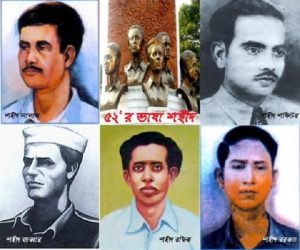
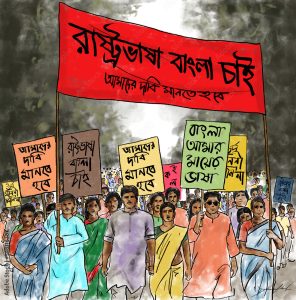
On February 21, students from Dhaka University and colleges gathered on campus. As they marched toward the provincial assembly, police opened fire. Among the martyrs were:
Rafiq Uddin Ahmed (student)
Abdul Jabbar (protester)
Abul Barkat (university student)
Abdus Salam (office worker)
Over 100 protesters were injured, and the deaths galvanized public sentiment.
Funeral Processions and Nationwide Uprising
The martyrs’ funerals turned into mass demonstrations. Strikes, protests, and cultural programs spread across East Pakistan. Poets like Shamsur Rahman and Al Mahmud wrote verses immortalizing the martyrs.
 Aftermath and Achievements
Recognition of Bengali (1956)
Under relentless pressure, the Pakistani government amended the constitution in 1956, granting Bengali official status alongside Urdu.
Cultural Awakening and Nationalism
The movement transformed Bengali identity:
Literature and Art: Works like Abdul Gaffar Choudhury’s song “Amar Bhaiyer Rokte Rangano” became anthems.
Education: Bengali was introduced in schools and official documents.
Political Mobilization: The Awami League, led by Sheikh Mujibur Rahman, gained momentum, culminating in the Six-Point Movement (1966) and the 1971 Liberation War.
Legacy: From Local Protest to Global Inspiration
International Mother Language Day
In 1999, UNESCO declared February 21 as International Mother Language Day, honoring the 1952 martyrs and promoting linguistic diversity.
Symbols of Resistance
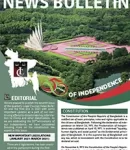
Shaheed Minar: The Martyr’s Monument in Dhaka, built in 1952 and rebuilt in 1963, stands as a symbol of linguistic pride.
Bangladesh’s National Identity: The movement is enshrined in Bangladesh’s constitution and cultural ethos.
Visual and Multimedia References
(Suggested links for further exploration)
Images
Shaheed Minar: The iconic monument in Dhaka.
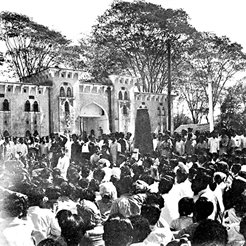
1952 Protest Photographs: Black-and-white images of student marches.
Martyrs’ Portraits: Artistic renditions of Barkat, Salam, Rafiq, and Jabbar.
Videos
Documentary: “Bhasa Andolon: The Revolution of 1952” (available on YouTube).
Archival Footage: British Pathé and DW News segments on the Language Movement.
Animated Short Films: UNESCO’s tributes to International Mother Language Day.
Conclusion
The 1952 Language Movement was more than a struggle for language—it was a fight for equality, justice, and the right to cultural expression. Its legacy lives on in Bangladesh’s national spirit and global efforts to preserve linguistic heritage. By remembering the martyrs of 1952, we honor the universal truth that language is not merely a tool of communication but the soul of a people.